
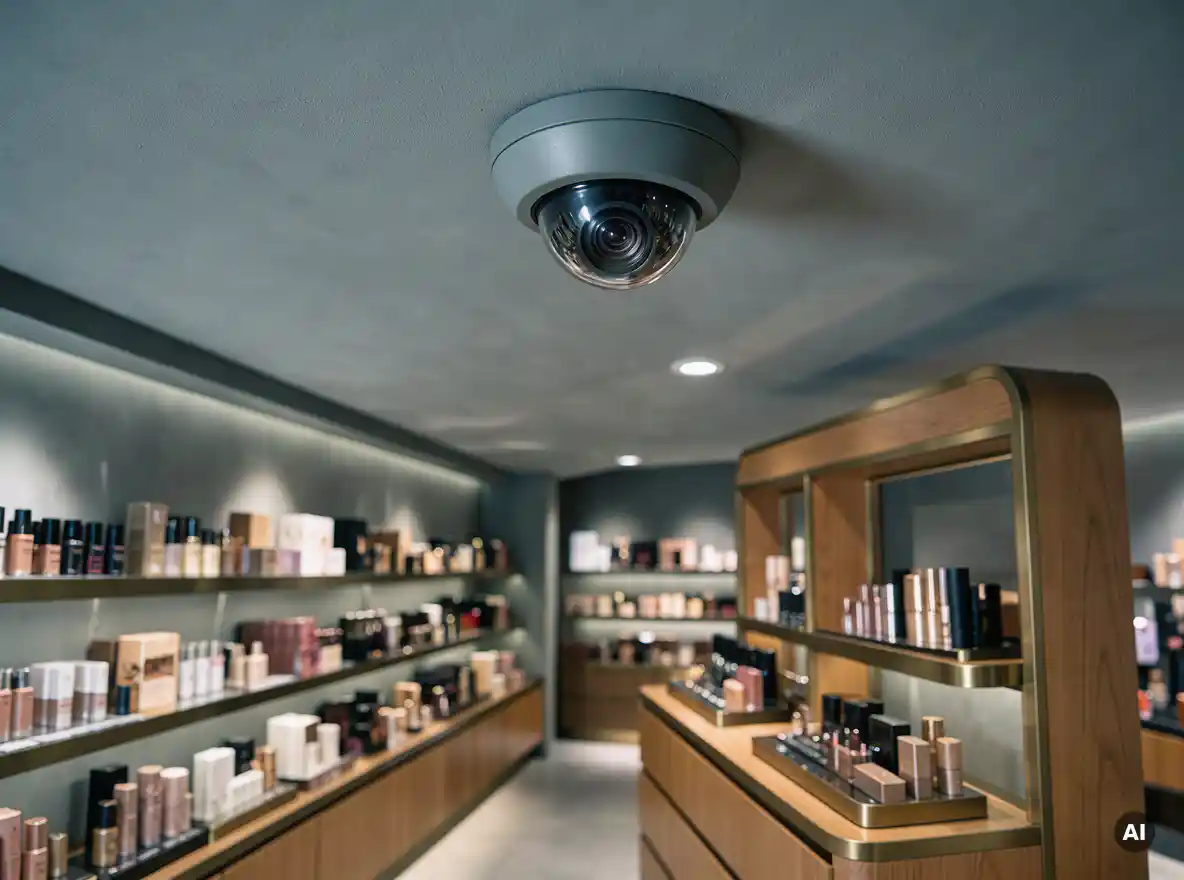
CCTV reduces shoplifting when visible cameras are paired with active monitoring, clear signage and a defined response procedure. Used alone, cameras deter opportunistic offenders but rarely stop determined or organised theft. The strongest retail loss prevention programmes treat CCTV as one layer within a wider strategy that includes store layout, secure fixtures and staff engagement. The sections below address how cameras deter theft, where they fall short, and how to build a balanced approach.
CCTV deters shoplifters by increasing the perceived risk of identification and prosecution. Visible cameras, public view monitors and warning signage signal that behaviour is recorded, which discourages opportunistic theft. The deterrent effect depends on visibility, placement and the offender's belief that footage will be acted upon.
Most shoplifting is opportunistic rather than planned. An individual who sees a camera trained on a fixture, or sees their own image on a display monitor near the entrance, reassesses the likelihood of being caught. Deterrence therefore relies on perception as much as technology.
Footage also supports investigations. Recorded evidence assists with police reports, helps identify repeat offenders and gives loss prevention teams data on where and when incidents occur. This information allows retailers to adjust staffing, stock placement and security resources based on evidence rather than assumption.
CCTV fails to stop theft when cameras are poorly positioned, unmonitored or ignored by offenders who accept the risk. Footage reviewed only after an incident can support prosecution but cannot prevent the loss. Cameras also cannot physically obstruct a product from being taken.
Several common weaknesses reduce effectiveness:
These limitations explain why cameras alone seldom deliver the loss reduction retailers expect.
The most effective approach layers CCTV with physical, procedural and human controls. Cameras provide visibility and evidence, while store design, secure merchandising, trained staff and clear incident procedures prevent theft before it occurs. Each layer compensates for the limitations of the others.
A practical combined strategy includes:
This layered model also reduces dependence on any single point of failure, which is critical for multi-site operators.
Store layout affects shoplifting risk by determining sightlines, customer flow and how easily staff can observe vulnerable areas. Open, well-lit floor plans with low fixtures in remote zones reduce concealment opportunities, while cluttered or obstructed layouts increase them. Layout is one of the most cost-effective loss prevention tools available.
Several layout principles consistently support loss reduction:
Layout should be planned alongside camera placement so that fixtures do not obstruct coverage and cameras reinforce the areas the floor plan already protects.
Secure displays and fixtures reduce theft of high-value products by physically limiting access while keeping the product visible and appealing. Locked cabinets, tethered testers, restricted dispensing mechanisms and controlled-access units raise the effort required to steal, which prevents loss at the source rather than recording it afterwards.
This matters most in categories where small, high-value items are heavily targeted, such as beauty, skincare, health and consumer electronics. The challenge is balancing protection against the shopper experience. Excessive barriers suppress sales by making products difficult to browse, so the objective is to protect without creating friction.
Well-engineered point of sale and display solutions achieve this through considered design: tamper-resistant construction, clear product presentation, and access mechanisms that remain intuitive for shoppers and straightforward for staff. Fixtures designed for security from the outset perform better than protective measures retrofitted onto standard units. Ongoing retail maintenance and support also ensures that locks, fixings and mechanisms remain functional, since a damaged or neglected security fixture quickly becomes a vulnerability.
Retailers should weigh CCTV costs against measurable shrinkage data, comparing total ownership cost with expected loss reduction and secondary benefits. A system justifies investment when it addresses verified loss patterns, supports a response process and integrates with other controls. Installing cameras without a defined objective rarely delivers a return.
A sound evaluation considers:
The strongest business case compares options against each other rather than assessing CCTV in isolation.
Pivotal designs, manufactures, installs and maintains in-store solutions that protect products without compromising the shopper experience. Our in-house team manages the full project lifecycle, so security considerations are built into fixtures and displays from the first concept rather than added afterwards.
To discuss a secure, high-performing in-store solution for your products, contact Pivotal today and speak with a team that delivers from concept through to installation and beyond.