
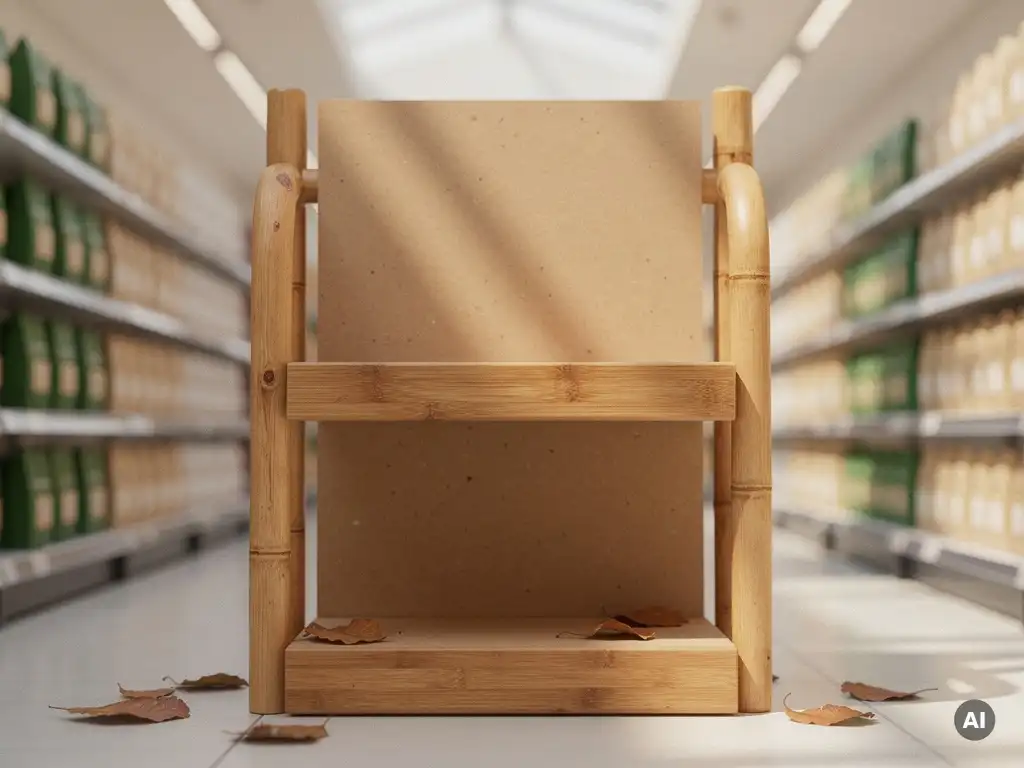
Sustainability goals are directly reshaping which point of sale materials brands select, how briefs are written, and how retail design partners are chosen. In 2026, eco-friendly POS is no longer a differentiator; it is an expectation from retailers, brand owners, and increasingly from shoppers themselves. The questions below unpack the key decisions, trade-offs, and conversations that define sustainable retail display strategy this year.
The most sustainable point of sale materials in 2026 are those that combine low-carbon production, recyclability or biodegradability, and durability relative to their intended lifespan. FSC-certified timber, recycled metals, bio-based plastics, and responsibly sourced cardboard lead the field, each assessed not just on material composition but on end-of-life disposal routes.
Material sustainability is rarely binary. A recycled aluminium extrusion used across a five-year permanent fixture carries a very different environmental profile from a single-use corrugated display, even if the corrugated unit is technically biodegradable. The most credible sustainable POS choices in 2026 are evaluated across the full lifecycle: raw material extraction, manufacturing energy, transport, in-store use, and what happens when the display is decommissioned.
Key materials gaining traction in sustainable retail displays include:
The right material choice depends on display type, campaign duration, and retailer requirements, factors that must be resolved early in the design process.
Sustainability targets change the brief-writing process by introducing material, lifecycle, and end-of-life requirements alongside the traditional parameters of aesthetics, cost, and timeline. A sustainability-informed brief specifies not just what the display should look like, but what it should be made from, how long it should last, and how it will be disposed of or recovered at the end of its use.
Brands with formal environmental commitments, whether tied to net-zero targets, packaging reduction pledges, or retailer sustainability programmes, must embed those commitments into the brief from the outset. Retrofitting sustainability considerations after a design has been developed adds cost, delays timelines, and often produces compromised outcomes.
A sustainability-aligned brief for a retail display typically addresses:
Design and manufacturing partners who understand these requirements can translate them into practical, buildable solutions, rather than treating sustainability as a constraint to be managed around.
The key distinction is that permanent POS typically has a lower environmental impact per use, while temporary POS generates more frequent material waste but can be appropriate when designed for full recyclability. Sustainability impact is determined less by the category label and more by how well the display's lifespan matches the materials used to construct it.
Temporary displays, used for promotional campaigns, seasonal activations, or product launches, are often produced from corrugated board or lightweight substrates. When these materials are kept to a single material stream and collected for recycling, the environmental impact is manageable. The problem arises when temporary displays are over-engineered with mixed materials, laminates, or fixings that prevent easy recycling, or when they are produced in volumes that exceed actual retail placement.
Permanent fixtures carry higher upfront material and manufacturing costs, but their environmental case strengthens over time. A well-designed permanent display in a pharmacy or department store, built from durable certified timber or recycled metal and maintained over several years, distributes its carbon footprint across a much longer service life. The sustainability argument for permanent POS is strongest when the display is designed for disassembly, allowing components to be repaired, updated, or recycled individually rather than scrapped as a whole unit.
The most common sustainability error in POS planning is applying permanent-grade materials to what is functionally a temporary display, or using disposable-grade materials for a fixture expected to last multiple years. Aligning material specification to actual lifespan is the single most effective step brands can take to reduce the environmental impact of their retail display programme.
Sustainable POS materials often carry a higher upfront cost because they are produced at lower volumes, require certified supply chains, or involve more complex manufacturing processes than conventional alternatives. Recycled content materials, bio-based substrates, and FSC-certified timber all involve supply chain verification that adds cost at the sourcing stage.
However, the upfront cost premium is frequently offset across the display's lifetime. A permanent fixture built from durable, sustainable materials typically requires less frequent replacement, incurs lower disposal costs, and avoids the reputational and compliance risks associated with non-compliant materials in retailers with strict sustainability policies.
Cost factors specific to sustainable POS production include:
Brands that evaluate POS investment on a total cost of ownership basis, factoring in replacement frequency, disposal, and retailer compliance requirements, consistently find that sustainable materials represent stronger commercial value over a programme's full duration.
Retailers are exerting direct influence over brand sustainability choices at the point of purchase through supplier codes of conduct, display approval processes, and sustainability scorecards that assess incoming fixtures against environmental criteria. Major UK retailers have embedded sustainability requirements into their brand partner agreements, meaning non-compliant displays are rejected before they reach the shop floor.
This influence operates at several levels. At the most visible level, retailers specify which materials are permitted within their store environment, banning single-use plastics, requiring recyclable substrates, or mandating that permanent fixtures meet minimum recycled content thresholds. Brands that arrive with displays built from non-approved materials face costly redesigns and delayed launches.
Beyond material restrictions, retailers are increasingly evaluating the sustainability credentials of the brands they stock, and the displays those brands use are a visible signal of commitment. A brand placing promotional displays in a pharmacy chain or department store is, in effect, making a public statement about its environmental values. Retailers are aware of this, and their sustainability teams scrutinise incoming POS accordingly.
For brands operating across multiple retail partners, each with their own sustainability framework, the complexity of managing compliant display programmes increases significantly. Working with a retail design partner who understands retailer-specific requirements and has established approval relationships reduces both the risk of rejection and the time required to navigate compliance processes.
Brands should ask a retail design partner six core questions to assess their genuine capability in sustainable POS production: what materials they specify and why, how they verify sustainable sourcing, whether they design for end-of-life, where manufacturing takes place, how they handle retailer compliance, and what evidence they can provide of previous sustainable display programmes.
These questions move the conversation beyond surface-level claims and into the specifics of how a partner actually operates. Sustainability in retail display production is an area where stated values and actual practice can diverge significantly, particularly around sourcing verification and end-of-life planning, which require systems and relationships that take time to build.
The most important questions to raise in a briefing conversation include:
A partner who answers these questions with specificity, supporting evidence, and an honest account of trade-offs is demonstrating the kind of transparency that sustainable POS programmes require.
Pivotal operates as a full-service retail design partner, handling the complete journey from sustainable material specification through to manufacture and installation, giving brands a single accountable partner for their entire display programme. For brand owners navigating increasingly complex retailer sustainability requirements in 2026, this end-to-end capability removes the coordination risk that comes with managing multiple suppliers.
Brands looking to align their sustainable retail displays with both commercial performance and environmental targets are invited to contact Pivotal to discuss how a bespoke programme can be developed around their specific brief.