
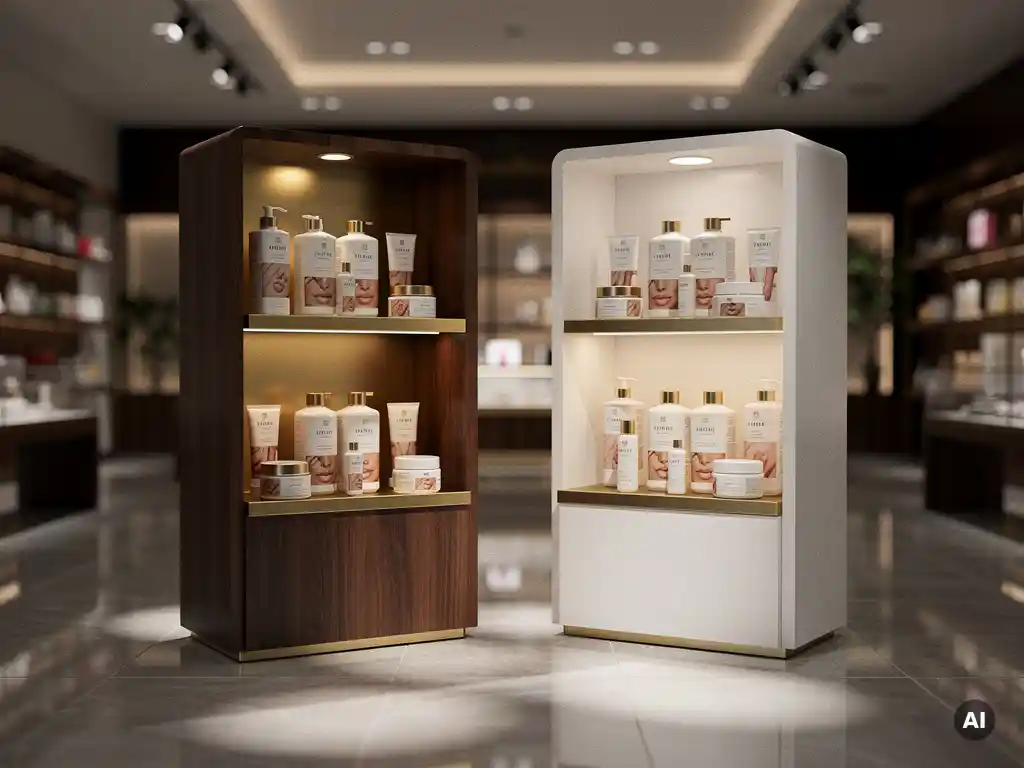
The choice between temporary and permanent POS solutions depends primarily on campaign duration, retailer agreements, and the strategic role the display plays within the wider brand plan. Temporary displays suit short-term promotional activity, seasonal campaigns, and product launches, while permanent fixtures are the right investment when a brand holds a confirmed, long-term retail space. The sections below address the most important questions brands face when making this decision.
Temporary POS displays are designed for short-term deployment, typically ranging from a few weeks to a few months, and are built from lighter, lower-cost materials such as corrugated card, foam board, or basic plastics. Permanent POS fixtures are engineered for longevity, constructed from durable materials including acrylic, metal, and joinery-grade wood, and are intended to remain in-store for an extended period, often years.
Beyond materials, the two differ significantly in terms of investment, brand presence, and retailer relationship. A permanent fixture signals a committed, ongoing retail partnership and is typically subject to more rigorous retailer approval processes. A temporary display offers flexibility and speed to market, making it suited to promotional windows, new product launches, and seasonal activations. Both serve distinct strategic purposes and are not interchangeable without careful consideration of campaign objectives.
A temporary POS display is the appropriate choice when the campaign has a defined end date, when the product is being trialled in a new retail environment, or when the brand needs to respond quickly to a market opportunity. Temporary displays can be designed, produced, and deployed faster than permanent alternatives, making them well suited to time-sensitive activations.
Common scenarios where a temporary in-store display makes commercial sense include:
Temporary solutions also allow brands to experiment with creative formats and messaging without the cost commitment of a permanent installation. When the objective is to generate impact within a defined timeframe, a well-designed temporary display delivers a strong return on investment relative to its production cost.
A permanent POS fixture is the stronger choice when a brand holds a confirmed, ongoing space within a retail environment and requires a display solution that communicates brand equity consistently over time. Permanent retail fixtures are built to withstand daily shopper interaction, staff handling, and the rigours of a live retail floor, making them appropriate for any brand with an established, long-term retail presence.
Permanent fixtures are particularly well suited to:
The upfront investment in a permanent fixture is typically higher, but the cost per day of deployment is considerably lower when measured across a multi-year lifespan. For brands with confirmed retail agreements, this calculation almost always favours the permanent route.
Retailer compliance requirements are one of the most significant factors in determining which type of POS display a brand can deploy. Every major retailer operates its own set of guidelines governing dimensions, materials, fixings, weight limits, and installation methods. Non-compliant displays are rejected before they reach the shop floor, regardless of how well designed they are.
Temporary displays typically face lighter compliance scrutiny, particularly for freestanding floor units or countertop units that do not require structural fixing to the retail environment. However, even temporary solutions must meet fire safety, material safety, and retailer brand guidelines. Permanent fixtures are subject to more extensive approval processes, often requiring detailed CAD drawings, material specifications, and sign-off from the retailer's store development or property team before production begins.
Working with a partner whose installation teams are retailer-approved significantly reduces the risk of compliance failure at the point of installation. Pivotal's own employed fitting teams are experienced in navigating the compliance requirements of major UK retailers, ensuring that both temporary and permanent displays are installed to specification and without disruption to trading.
Sustainability is an increasingly important factor in the POS decision-making process, both because of brand responsibility commitments and because retailers are applying greater scrutiny to the environmental impact of in-store materials. The choice between temporary and permanent displays carries distinct sustainability implications that brands must weigh carefully.
Temporary displays, particularly those made from corrugated card or recyclable substrates, can have a lower material footprint per unit, but the cumulative environmental impact of repeated production and disposal cycles can be significant. A permanent fixture, designed and manufactured to last several years, often represents a more sustainable choice when measured across its full operational lifespan.
Key sustainability considerations when selecting a point of sale display type include:
Brands that prioritise sustainability as part of their retail strategy should evaluate the full lifecycle of any display solution, not just the initial production cost or material specification.
Temporary and permanent POS displays are not mutually exclusive, and many brands use both in combination to maximise in-store impact throughout the year. A permanent fixture provides the consistent branded presence that anchors a product range within the retail environment, while temporary displays layer promotional messaging, seasonal campaigns, or new product introductions on top of that foundation.
This approach is particularly effective in categories such as beauty, health, and personal care, where core ranges benefit from permanent branded bays or units, and where seasonal gifting or promotional events create natural opportunities for temporary point of sale activity alongside them. The two formats work in parallel rather than in competition, each fulfilling a distinct role within the broader in-store brand strategy.
The key to making both formats work together effectively is consistency in design language. Temporary displays should be developed with the same brand guidelines, colour systems, and material logic as the permanent fixtures they sit alongside, ensuring the shopper experience feels cohesive rather than disjointed. A design and manufacturing partner capable of producing both formats under one roof is a significant advantage in maintaining that consistency.
Pivotal works with brands across the full spectrum of retail display solutions, from short-run temporary activations to multi-site permanent fixture roll-outs. As a full-service retail design company, Pivotal brings together design, manufacturing, compliance, and installation under one roof, removing the coordination risk that comes with managing multiple suppliers.
In 2025 alone, Pivotal's in-store engineers visited a store every 34 minutes and installed over 2,000 new retail and brand experiences, demonstrating the operational scale and reliability that brand owners and marketing directors require from a trusted retail partner. If you are evaluating your next point of sale display strategy and need a partner who can manage the full project lifecycle, contact Pivotal to discuss your brief.