
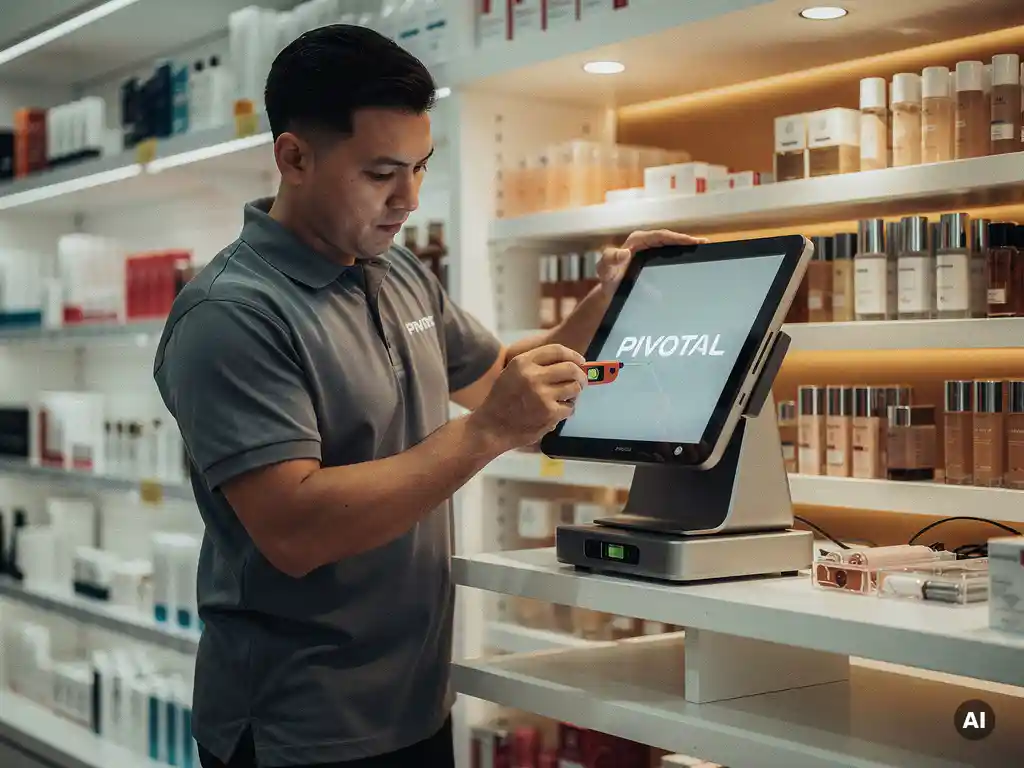
Ensuring POS displays are installed correctly in stores requires a professional fitting team with retailer-approved access, a structured installation process, and a robust compliance verification system. Without these three elements in place, even the best-designed display can fail to deliver its intended commercial impact. The sections below address the most critical questions brands ask when planning a display installation programme.
Responsibility for POS display installation typically falls to the brand owner or their appointed retail design partner, not the retailer. The brand commissions the display, arranges logistics, and must ensure the fitting team meets the retailer's access and safety requirements before any installation takes place. The retailer sets the rules; the brand delivers within them.
In practice, this means brands need either an in-house installation resource or a specialist third-party partner with proven experience working inside retail environments. Many brands underestimate the operational complexity involved. Retailer-approved fitters must carry the right accreditations, follow store-specific protocols, and work within trading hours or agreed access windows. Attempting to manage this through general contractors unfamiliar with retail environments frequently leads to delays, compliance failures, and damaged retailer relationships.
For brands operating across multiple store locations, coordinating installation teams at scale adds another layer of complexity. A single point of accountability, with a dedicated project manager overseeing all site activity, is essential to maintaining consistency and meeting agreed installation timelines.
Poorly installed POS displays create a range of commercial and operational problems. At the most basic level, a display that is incorrectly positioned, unstable, or incomplete will not perform its function of directing shopper attention and driving conversion at the point of purchase. Beyond lost sales, the consequences can include retailer penalties, removal of the display, and damage to the brand's credibility with the retail partner.
Common failure points include:
Each of these issues carries a cost, whether financial, reputational, or both. Retailers have limited tolerance for disruption to their trading environment, and a poorly executed installation reflects directly on the brand, not the fitter. This is why the quality of the installation partner matters as much as the quality of the display itself.
Retailers enforce POS compliance through a combination of planogram specifications, store manager sign-off, and increasingly, digital compliance reporting tools. A planogram defines precisely where a display must be positioned, how much space it occupies, and how it must be presented. Deviation from these specifications can result in the display being relocated or removed entirely by store staff.
Major retail chains typically require installation teams to complete a formal sign-off process on-site, confirming that the display has been placed in accordance with the agreed brief. Some retailers use third-party compliance auditors who conduct post-installation checks across their estate. Photographic evidence of completed installations is now standard practice, providing a verifiable record for both the brand and the retailer.
Brands operating in pharmacy chains, department stores, and grocery multiples should expect detailed compliance requirements and should ensure their installation partner is familiar with the specific protocols of each retail environment. Retailer approval of fitting teams is not uncommon, and working with a partner who already holds these approvals removes a significant administrative burden from the brand.
A professional point-of-sale installation process follows a structured sequence that begins well before a fitter enters a store. It starts with pre-installation planning, moves through logistics and site preparation, and concludes with documented sign-off and post-installation reporting. Each stage is designed to minimise disruption to the retail environment and maximise the quality of the finished installation.
The key stages of a professional retail display fitting process are:
This level of process discipline is what separates a professional retail display fitting operation from an ad hoc approach. It protects the brand, satisfies the retailer, and ensures the display performs as designed from day one.
Across a multi-store POS display rollout, installation quality is maintained through centralised project management, standardised installation documentation, and systematic post-installation auditing. Without these controls, quality inevitably varies between sites, undermining the consistency that brand owners and retailers both require.
Effective quality assurance across a retail POS rollout typically relies on:
The scale of a rollout does not reduce the expectation of quality. A brand placing displays across hundreds of locations needs the same standard of installation at every site. This demands a partner with the operational infrastructure to manage volume without sacrificing precision.
Pivotal provides a complete, end-to-end in-store display installation service, from initial design and manufacturing through to on-site fitting and compliance reporting. As a full-service retail design partner, Pivotal manages the entire installation programme using its own employed fitting teams, all of whom are retailer-approved and experienced in working across major UK retail environments.
For brands seeking a trusted partner to manage their next POS display rollout with precision and accountability, contact the Pivotal team to discuss your project requirements.