
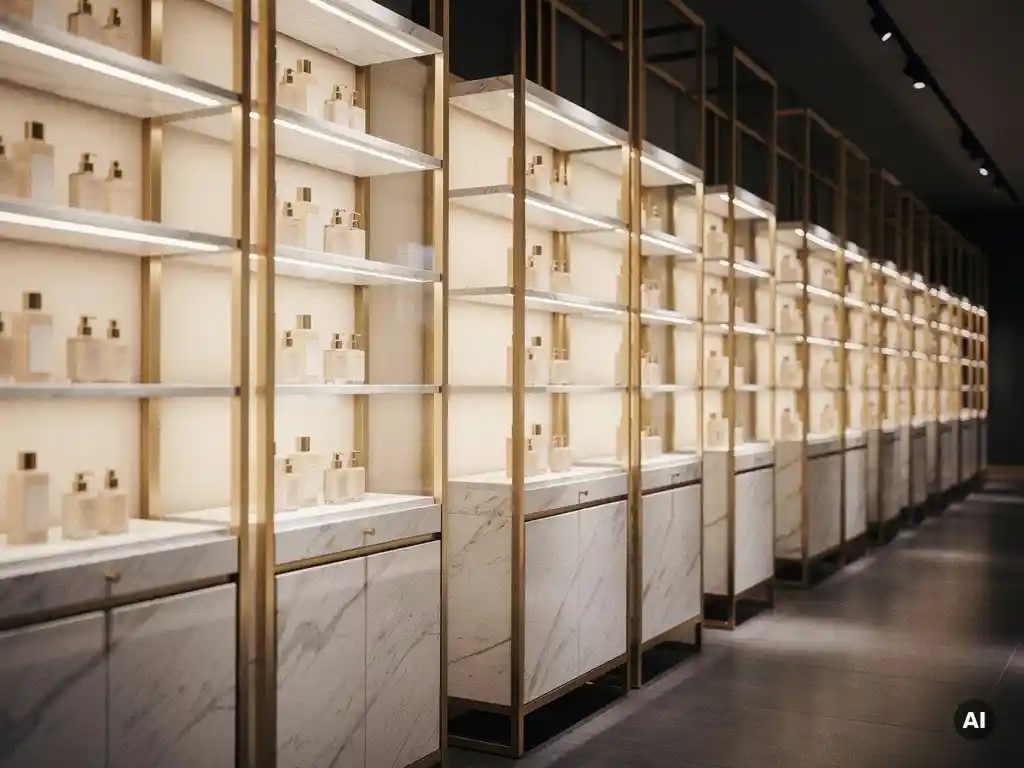
Maintaining brand identity across multiple store locations requires a combination of detailed brand guidelines, standardised physical assets, and a centralised rollout process managed by a single accountable partner. When every store shares the same fixtures, display systems, and visual language, shoppers experience the brand consistently regardless of which location they visit. The sections below address the most common questions retail operators face when managing brand consistency at scale.
Brand inconsistency across store locations is most commonly caused by fragmented procurement, poor documentation of visual standards, and the absence of a centralised implementation process. When individual store managers make local decisions about display placement, fixture selection, or graphic application, the cumulative effect is a brand that looks and feels different from one location to the next.
Several structural factors compound this problem. Rapid store expansion often outpaces the development of proper brand governance. Seasonal updates and promotional campaigns are rolled out without a controlled process, leading to uneven execution. Suppliers vary by region, producing inconsistencies in materials, finishes, and construction quality. And without a mechanism for monitoring compliance, deviations from brand standards go undetected until they have already eroded shopper trust.
For multi-location retail operators, the root cause is rarely intentional. It is systemic. Inconsistency grows where clear processes and accountable partners are absent.
In-store fixtures and displays are among the most powerful physical expressions of a retail brand. They communicate quality, reinforce category ownership, and shape the emotional response a shopper has the moment they encounter a product. A well-designed display does not merely hold product; it tells a brand story in three dimensions.
Fixtures establish visual hierarchy within a store environment. They direct shopper attention, create dwell points, and differentiate branded space from generic shelving. For brands operating across multiple locations, the fixture is often the single most consistent element a shopper encounters, which makes its design and manufacturing quality critical to brand perception.
Poor-quality or mismatched fixtures send an implicit message about brand value. Conversely, a cohesive, well-crafted display system signals investment, credibility, and professionalism. This is particularly important in competitive retail environments such as pharmacy, beauty, and grocery, where brand differentiation at the point of purchase directly influences purchase decisions.
Retail brand guidelines translate to physical store environments through a set of documented specifications that govern every tangible element of the in-store experience. These include fixture dimensions and materials, colour matching across substrates, graphic production standards, typography application, and spatial layout rules. Without this level of detail, brand guidelines remain aspirational rather than operational.
Effective physical brand standards go beyond a standard brand book. They account for the realities of retail construction: how colours behave under different lighting conditions, how materials age in high-footfall environments, and how display systems accommodate varying store footprints. A guideline that works on screen must be translated into manufacturing specifications that deliver the same result in every store.
The most robust approach involves close collaboration between brand teams and an experienced in-store design partner who understands both the creative intent and the practical constraints of physical retail. This ensures that the brand vision survives the journey from concept to shop floor without compromise.
For most multi-location retail operators, a centralised approach to store design is the more effective strategy for maintaining brand consistency. Centralised design means that all fixture specifications, display systems, and visual standards are developed and approved at a brand or head office level, then implemented uniformly across the estate. This eliminates the variability that comes from local decision-making.
That said, a degree of localisation is often necessary to accommodate differences in store size, regional product range, or local planning requirements. The key is to localise within a controlled framework, allowing flexibility in layout or product selection while keeping the physical brand language fixed. This is sometimes described as a modular approach, where a standardised system of components can be configured differently without departing from the brand.
Operators who attempt full localisation without a governing framework typically find that brand consistency deteriorates over time. The more autonomy individual stores have over physical design decisions, the greater the investment required in monitoring and remediation to bring the estate back into alignment.
Rolling out brand updates across multiple stores simultaneously requires a phased programme managed by a partner with the logistical capability to manufacture, deliver, and install at scale. The process begins with finalising the updated design and producing a detailed rollout brief that covers every store in the estate, including site-specific variations. From there, manufacturing must be coordinated to ensure all components are produced to the same specification and are available for installation within the required timeframe.
Sequencing is critical. Stores are typically prioritised by commercial importance, footfall volume, or geographic clustering to maximise installation efficiency. A dedicated project management function is essential to track progress across multiple sites simultaneously, manage logistics, and resolve on-site issues without delaying the broader programme.
Pivotal's in-store engineering teams visited a store every 34 minutes in 2025, completing over 2,000 retail and brand experience installations across the year. This level of operational capacity is what separates a managed brand rollout from an ad hoc refresh. When the installation function is handled by employed fitters working within a single managed programme, quality control and timeline adherence are significantly easier to maintain.
Measuring brand standard compliance in physical retail environments requires a structured audit programme, clear scoring criteria, and a feedback loop that connects findings to corrective action. Without a formal measurement process, brand drift goes undetected until it becomes visible to shoppers and damaging to brand equity.
Effective compliance measurement typically involves the following elements:
The most reliable compliance programmes are those managed by the same partner responsible for design and installation. When accountability sits with a single organisation across the full project lifecycle, there is no ambiguity about responsibility when standards fall short.
Pivotal provides a fully integrated solution for retail operators who need to establish and maintain brand consistency across a multi-location estate. As a retail display design partner, Pivotal manages every stage of the process under one accountable structure:
In 2025, 15 new global brands chose Pivotal as their in-store partner. If you are managing brand standards across multiple locations and need a partner with the design capability and operational scale to deliver consistently, contact Pivotal today to discuss your requirements.
The timeline for a full brand rollout depends on the size of the estate, the complexity of the fixtures, and the sequencing strategy agreed at the outset. A mid-sized estate of 50–100 stores can typically be completed within three to six months when managed by a partner with sufficient manufacturing and installation capacity. Larger estates or those requiring bespoke joinery and metalwork may require phased programmes spanning 12 months or more, with priority locations addressed first to generate early commercial impact.
The most important factor is whether the partner can manage design, manufacturing, installation, and compliance under a single accountable structure. Fragmented supply chains — where design, production, and installation are handled by separate suppliers — are one of the leading causes of inconsistency at the point of execution. Look for a partner with in-house manufacturing capability, employed installation teams, and a proven track record of multi-site rollouts at scale.
A modular fixture system is the most effective solution for estates with significant variation in store size or layout. Modular systems are designed as a family of standardised components — bays, end caps, counters, display units — that can be configured differently to suit each location without departing from the core brand language. This approach gives individual stores the flexibility they need while keeping the visual identity fixed and recognisable across the estate.
The most common mistake is treating brand rollout as a one-time project rather than an ongoing programme. Fixtures degrade, graphics become outdated, and store teams make ad hoc changes over time — all of which erode consistency without a structured maintenance and audit process in place. A second frequent error is allowing individual store managers to source local replacements for damaged or missing elements, which introduces material and finish variations that are difficult to reverse at scale.
Seasonal and promotional updates should be treated as a controlled sub-programme within your broader brand governance framework, not as standalone local initiatives. This means producing all campaign graphics and display elements centrally to a pre-approved specification, distributing them through a coordinated logistics programme, and installing them within a defined window so that all locations update simultaneously. Stores that receive promotional materials late or install them inconsistently undermine the campaign's impact and create a fragmented shopper experience.
For most multi-location operators, the business case for a centralised programme becomes compelling from around 10 or more stores, where the cumulative cost of inconsistency — lost sales, brand erosion, and reactive remediation — begins to outweigh the investment in a structured approach. Beyond the direct commercial impact, a centralised programme typically delivers cost efficiencies through consolidated manufacturing runs, reduced waste, and more efficient installation scheduling compared to managing sites individually.
In many cases, existing fixtures can be partially refurbished rather than fully replaced, depending on their structural condition and how significantly the brand standards have changed. Common refurbishment options include re-skinning surfaces with updated laminates or graphics, replacing header and signage panels, and adding or modifying lighting elements. A thorough estate audit conducted before any rollout will identify which fixtures can be cost-effectively updated and which have degraded beyond the point where refurbishment delivers a consistent result.