
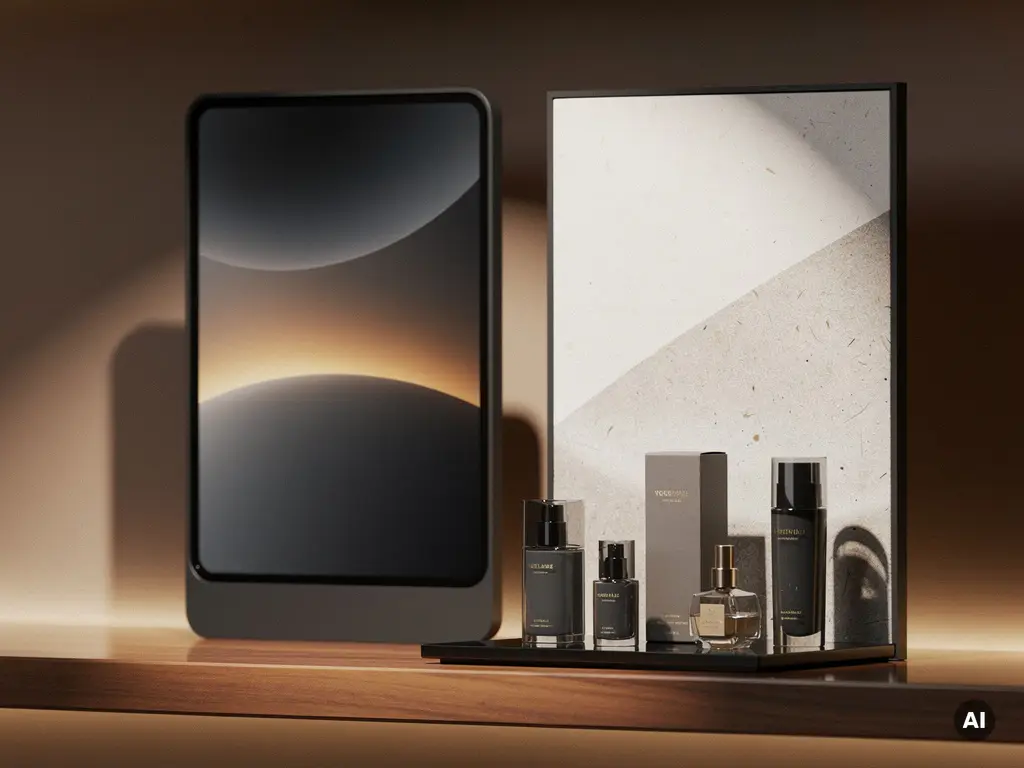
Both digital signage and printed POS drive in-store conversion, but neither format wins outright. Digital displays tend to outperform print in high-traffic, fast-moving environments where motion and dynamic content capture attention, while printed POS consistently delivers stronger results in considered-purchase categories where tactile context and permanence matter. The most effective retail strategies in 2026 use both, deployed strategically based on product type, retail environment, and shopper behaviour.
Below, each of the key questions brands and retail experience managers face when choosing between these two formats is answered directly, drawing on established retail principles and in-store display practice.
Neither digital nor printed displays universally convert better; performance depends on context. Digital signage has a measurable advantage in environments with high footfall and short dwell windows, where motion and brightness interrupt the shopper's visual field. Printed POS performs with greater consistency in structured retail settings where the display is positioned at the precise moment of purchase decision.
The critical variable is shopper intent. A consumer browsing a pharmacy aisle with a specific product in mind responds differently to a display than one exploring a fashion concession with no fixed agenda. Digital formats excel at interrupting passive shoppers; printed formats excel at confirming the choice of an active buyer. Conversion is not purely a function of the medium; it is a function of the medium matched to the moment.
Brands that treat this as a binary choice often underinvest in one channel at the expense of the other, leaving conversion on the table at both ends of the shopper journey.
Digital signage outperforms printed POS when motion, immediacy, and content flexibility are commercially valuable. Moving visuals attract peripheral attention more reliably than static graphics, making digital displays particularly effective in open-plan retail environments where the shopper has not yet committed to a category aisle.
The factors that give digital signage a conversion edge include:
These advantages are most pronounced in department stores, travel retail, and large-format grocery environments where the shopper journey is longer and attention must be earned across multiple touchpoints.
Printed POS outperforms digital signage when proximity to the product, tactile credibility, and permanence are the dominant conversion drivers. At the point of physical selection, the shelf edge, the counter display, the branded fixture, a well-crafted print execution often converts more reliably than a screen positioned nearby.
Print holds a clear advantage in several specific scenarios:
The longevity of print also matters commercially. A well-manufactured permanent display fixture continues to convert for months or years without ongoing content costs, making it a strong investment for stable product ranges.
Dwell time is one of the most significant determinants of which POS format performs better. The longer a shopper spends in proximity to a display, the more the balance shifts in favour of printed and physical formats. Conversely, brief dwell windows favour digital signage's ability to communicate quickly through motion and high-contrast visuals.
In environments where shoppers pause to read, compare, or consider, such as a skincare fixture in a pharmacy or a wine display in a supermarket, printed materials have the opportunity to communicate layered information: ingredients, benefits, provenance, and price. A screen in the same location may cycle through content the shopper never sees in full.
Where dwell time is short, such as a checkout queue or a high-footfall entrance zone, digital signage's rapid visual impact is an asset. A five-second animation communicates a promotional message more efficiently than printed text that requires the shopper to stop and read.
Retail experience managers should map dwell time by zone before committing to a display format. High-dwell zones reward depth and permanence; low-dwell zones reward immediacy and motion.
Digital signage carries a higher upfront capital cost but offers lower marginal cost for content changes, while printed POS has a lower initial investment but accumulates costs each time the creative or promotional message needs updating. The ROI calculation differs significantly depending on how frequently the brand needs to update its in-store messaging.
For brands running frequent promotional cycles, seasonal campaigns, price promotions, or product launches across a national retail estate, digital signage can deliver a lower total cost of ownership over time, because content changes require no physical production or installation. For brands with stable product ranges and consistent messaging, high-quality printed fixtures amortise their cost over a longer operational life and often represent the more efficient investment.
Additional cost considerations include:
Brands should model both formats against their specific promotional cadence and retail footprint before making a capital commitment to either.
In most retail environments, a hybrid POS strategy delivers the strongest conversion performance. Digital signage and printed displays serve different moments in the shopper journey, and deploying both, with each format assigned to the role it performs best, creates a more complete and effective in-store brand presence than either medium alone.
A practical hybrid framework assigns digital formats to high-traffic, low-dwell zones where attention must be captured quickly, and printed formats to proximity positions where the shopper is already engaged with the category. Permanent printed fixtures anchor the brand at the point of selection, while digital screens build awareness and drive footfall towards the fixture from further within the store.
The brands that execute hybrid strategies most effectively treat the two formats as complementary rather than competing. They maintain visual and messaging consistency across both channels, ensuring that a shopper who encounters a digital screen at the store entrance and a printed display at the shelf receives a coherent brand experience throughout.
Pivotal is a full-service retail design partner that supports brands in developing and executing both printed and digital POS strategies, from initial concept through to national installation. Working with major retailers across the UK, Pivotal's employed fitting teams installed over 2,000 new retail and brand experiences in 2025, with in-store engineers visiting a store every 34 minutes throughout the year.
Pivotal's capabilities across the full POS spectrum include:
Whether the brief calls for a precision-engineered permanent fixture, a high-impact temporary display, or a hybrid programme combining both, Pivotal manages the full project lifecycle without the need for multiple agencies. To discuss how the right display strategy can improve your in-store conversion performance, contact the Pivotal team directly.