
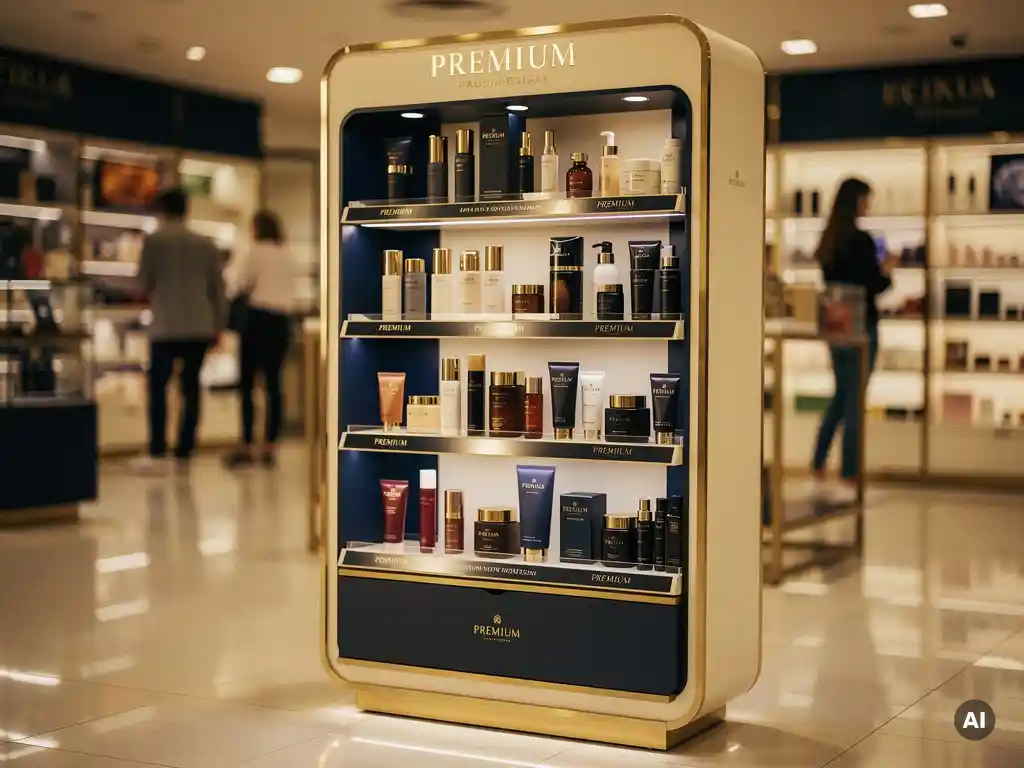
An off-shelf POS display is a freestanding or wall-mounted retail display unit positioned away from the main product shelf, designed to present a brand's products in a dedicated, high-visibility location within the store. Unlike standard shelf placements, off-shelf displays command their own space, drawing shopper attention at key decision-making moments. The sections below cover where these units sit, how they work, and when a brand should invest in one.
Off-shelf POS displays are positioned in high-traffic areas separate from the primary shelf run, typically at aisle ends (known as gondola ends or end-caps), near store entrances, beside checkout queues, or in promotional floor space at the centre of an aisle. Their defining characteristic is independence from the standard fixture layout, giving brands a standalone presence in the retail environment.
Retailers allocate these premium positions because they intercept shoppers at natural pause points, where footfall is highest and dwell time is greatest. A display placed at an aisle end, for example, is visible from multiple directions simultaneously, dramatically increasing the number of shopper impressions it generates compared to a standard shelf facing. In pharmacy and health and beauty environments in particular, off-shelf placement near consultation areas or category entrances can directly influence unplanned purchase decisions.
Off-shelf displays increase brand visibility by removing the product from a competitive shelf environment and presenting it within a branded, purpose-built structure that the shopper encounters before they reach the category aisle. At the point of purchase, this separation creates a visual hierarchy: the brand occupies its own space rather than competing side by side with adjacent products.
The commercial impact operates on several levels. First, the display itself acts as a three-dimensional brand communication tool, using colour, form, lighting, and graphic messaging to reinforce brand identity in a way that a shelf label cannot. Second, the physical positioning intercepts shoppers who may not have been actively seeking that product category, generating trial and incremental sales. Third, a well-designed in-store display signals brand investment and credibility: shoppers associate dedicated retail space with quality and authority.
For brands operating across multiple retail channels, consistent off-shelf display execution also reinforces recognition. A shopper who encounters the same display structure in a pharmacy and a department store builds a stronger brand association than one who sees the product shelved differently in each location.
The most common types of off-shelf POS displays used in retail include freestanding floor units, countertop displays, dump bins, spinner units, and branded bays or shop-in-shop structures. Each format serves a different commercial purpose, product type, and retail environment.
Material choice varies equally: acrylic, metalwork, joinery, and moulded components each offer different aesthetic and structural properties suited to different brand positionings and retail contexts.
A temporary off-shelf display is designed for a defined campaign period, typically weeks to a few months, and is constructed from lighter, lower-cost materials such as corrugated board or lightweight plastics. A permanent off-shelf display is engineered for extended use, built from durable materials including metal, solid acrylic, or hardwood, and is intended to remain in-store for a year or longer.
The distinction matters commercially because the two formats serve fundamentally different strategic objectives. Temporary displays are deployed to support product launches, seasonal promotions, or short-term tactical activity where speed to market and cost efficiency are priorities. They are often produced in higher volumes for national rollouts and replaced at campaign end.
Permanent displays represent a longer-term investment in brand presence. They are typically used by brands that hold a consistent ranging position within a retailer and want to own their space with a fixture that reflects premium brand values. The higher upfront production cost is offset by longevity, reduced replacement frequency, and the stronger brand signal that a substantial, well-crafted display communicates to the shopper.
Many brands operate both simultaneously: a permanent branded bay as the anchor structure, with temporary promotional units placed alongside it during key trading periods.
An off-shelf POS display is designed and manufactured through a structured process that moves from creative concept and CAD development through material specification, prototyping, production, and final installation. The process begins with a thorough brief that captures the brand's objectives, the retail environment, the product range to be displayed, and any retailer compliance requirements.
CAD design allows the structural form to be developed and refined before any physical material is committed, enabling brands to review dimensions, product capacity, and visual layout digitally. Rapid prototyping then produces a physical sample, critical for testing structural integrity, assessing material finishes, and confirming the display meets retailer approval criteria before full production commences.
Material selection is central to the outcome. Acrylic offers clarity and a premium aesthetic suited to beauty and cosmetics. Metalwork provides structural strength and a contemporary finish for fashion and lifestyle brands. Joinery and woodwork deliver warmth and craftsmanship for heritage or premium positioning. The manufacturing stage brings these elements together, with quality control embedded throughout to ensure consistency across what may be hundreds or thousands of units in a national rollout.
A brand should invest in an off-shelf POS display when it needs to drive visibility, trial, or sales volume beyond what standard shelf placement can deliver, particularly at moments of product launch, category entry, seasonal peak, or competitive defence. The decision is most commercially justified when the product benefits from shopper engagement at the point of purchase rather than relying solely on pre-existing brand awareness.
Specific triggers that indicate the right moment to invest include:
The investment case strengthens further when the display is designed to serve multiple retail environments simultaneously, spreading production costs across a larger estate. Brands that treat off-shelf display as a strategic, planned element of their retail marketing, rather than a reactive afterthought, consistently achieve stronger in-store performance and more productive retailer relationships.
Pivotal is a UK-based, full-service retail design company that manages the complete off-shelf display journey, from initial concept and CAD through to manufacturing and in-store installation. For brand owners and marketing directors seeking a single, accountable partner, Pivotal's end-to-end capability removes the complexity of managing multiple suppliers across a display project.
If your brand is planning a product launch, a fixture refresh, or a seasonal campaign that demands standout point of sale display execution, contact Pivotal to discuss how a bespoke off-shelf display solution can be designed, built, and installed to your brief.