
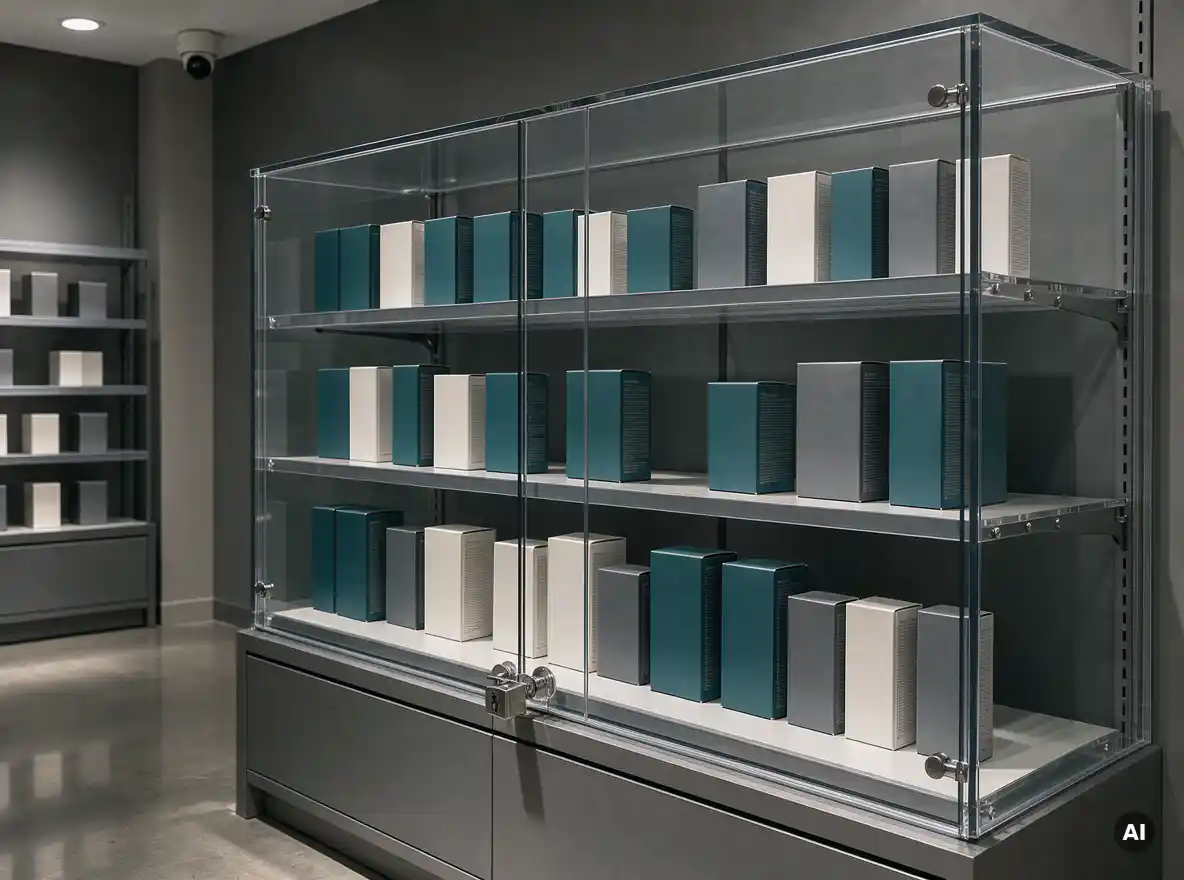
Organised retail crime (ORC) is the coordinated theft of goods by groups or networks, typically to resell stolen stock for profit rather than for personal use. Stores respond most effectively by combining layered loss prevention, secure fixture design, staff training, and data sharing with police and neighbouring retailers.
ORC affects every retailer that sells high-value, easily resold products. The questions below explain how it differs from opportunistic theft, what it costs stores, and which practical measures strengthen retail loss prevention without damaging the shopper experience.
Organised retail crime is planned, repeated, and commercially motivated, whereas ordinary shoplifting is typically opportunistic and carried out by individuals for personal use. ORC groups operate as networks, stealing in volume and moving goods through resale channels such as online marketplaces or informal trading.
The distinction matters because the two problems demand different responses. Opportunistic theft is largely deterred by visibility and basic security. ORC groups research stores, study staffing patterns, and return repeatedly to locations they judge to be vulnerable.
Common characteristics of ORC include:
Organised retail crime groups target products that are compact, high in value, in steady demand, and simple to resell. In UK retail this typically includes health and beauty goods, premium skincare and fragrance, razors, baby formula, over-the-counter medicines, small electronics, and branded confectionery or alcohol.
Resale value, not shopper appeal, drives selection. Items that carry a recognisable brand, hold their price on secondary markets, and fit easily into a bag or coat are the most exposed. For beauty and pharmacy brands this has direct implications for how stock is presented, since premium lines often sit at accessible height with minimal protection.
Brand owners should assess their own range against these criteria. A product's retail price, pack size, and resale appeal together indicate its risk level and should inform the fixture and display strategy applied to it.
Organised retail crime damages stores through direct stock loss, reduced on-shelf availability, higher security costs, and pressure on staff. The financial loss is only part of the impact. Gaps on shelves cost sales, and repeated incidents affect colleague wellbeing and retention.
The commercial consequences extend further for brand owners:
For suppliers, the implication is clear. A display that invites theft can undermine a product's in-store performance regardless of how strong the brand is.
Stores respond to organised retail crime most effectively through a layered approach: secure physical fixtures, visible deterrents, trained staff, accurate stock data, and collaboration with police and other retailers. No single measure is sufficient, because ORC groups adapt to any one control.
A practical retail loss prevention framework includes:
Consistent reporting is particularly valuable. It allows authorities to link incidents to the same groups and supports a coordinated response rather than isolated cases.
Yes. Store layout and display design reduce theft by increasing natural surveillance, limiting concealed areas, and controlling access to high-value stock. Well-planned fixtures make removal harder and detection easier, without relying solely on guards or tags.
Design principles that support loss prevention include:
Fixture design should be considered at concept stage rather than retrofitted. Security integrated into the original display, supported by retail maintenance and ongoing support to keep fixtures functioning, performs far better than add-on measures applied after losses begin.
Retailers protect products without harming the shopping experience by applying security selectively, designing it into the display so it appears intentional, and reserving heavy restrictions for genuinely high-risk lines. The aim is to deter theft while keeping products visible, accessible, and appealing.
Excessive barriers carry a cost. Locked cases and constant requests for staff assistance reduce impulse purchases and frustrate shoppers. The strongest solutions achieve protection through design rather than obstruction:
Balancing these priorities requires expertise in both shopper behaviour and fixture engineering, which is why loss prevention is best addressed as part of display design rather than as a separate security function.
Pivotal designs, manufactures, installs, and maintains in-store displays with security considerations built in from the first concept. Its in-house design, engineering, and fitting teams deliver the full project lifecycle, so protection and presentation are developed together rather than in isolation.
Brands facing rising shrink on premium lines should address display security before the next range launch or fixture refresh. Contact Pivotal to discuss a secure, shopper-friendly display solution for your products.