
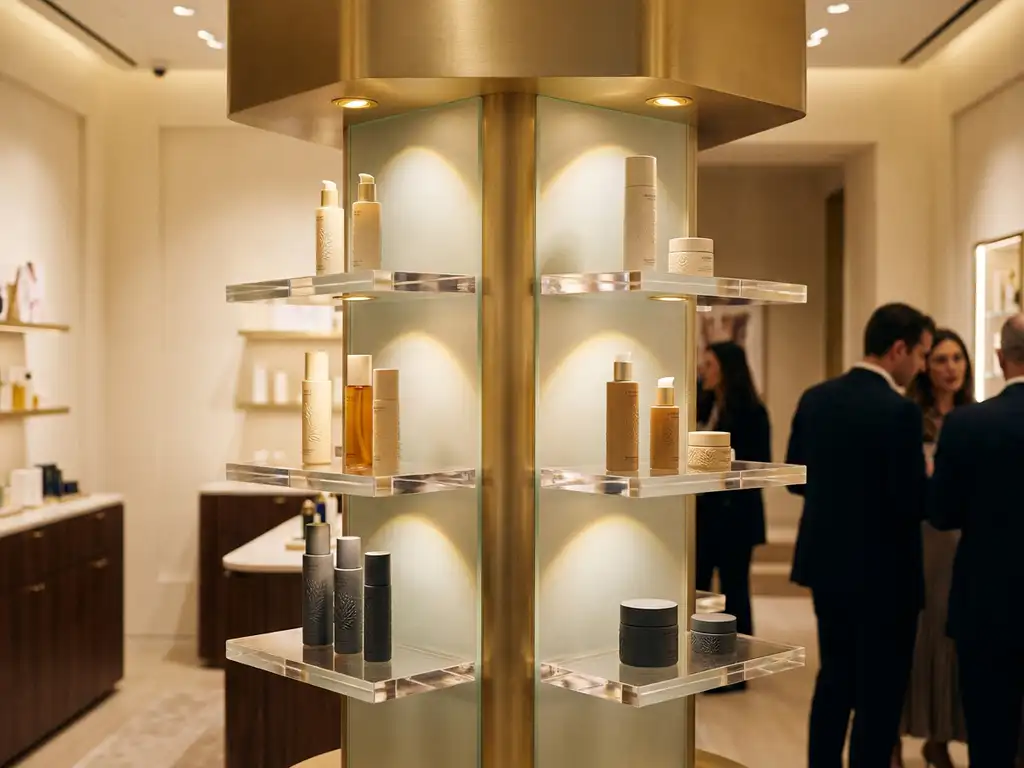
Retail display design is the strategic process of planning, creating, and positioning physical structures and visual elements within a retail environment to present products in a way that attracts shopper attention, communicates brand identity, and drives purchase decisions. It encompasses everything from freestanding floor units and countertop displays to wall-mounted fixtures, gondola ends, and point of sale installations. For brand owners and retailers, effective retail display design is not a cosmetic concern — it is a commercial one, directly influencing conversion rates, dwell time, and brand perception at the moment that matters most. The sections below address the most important questions surrounding retail display design, from the types of displays available to the role of sustainability in modern in-store environments.
The main types of retail display include freestanding display units (FSDUs), countertop displays, wall-mounted fixtures, gondola end caps, dump bins, pallet displays, and point of sale (POS) display stands. Each type serves a distinct commercial purpose and is selected based on the retail environment, product category, available floor space, and the shopper journey the brand is seeking to create.
Freestanding display units are among the most versatile formats, allowing brands to position products outside of standard shelf runs and create a standalone brand moment anywhere on the shop floor. Countertop displays are highly effective in pharmacy and beauty retail settings, where impulse purchase rates are elevated and proximity to the till is commercially valuable. End cap and gondola displays capture high footfall positions at the end of aisles, making them prime real estate for promotional and new product launches.
Temporary displays are typically constructed for short-term campaigns, seasonal promotions, or product launches, while permanent retail fixtures are built for longevity and are designed to withstand the daily demands of a busy retail environment. The choice between temporary and permanent solutions depends on budget, campaign duration, and the brand's long-term in-store strategy.
An effective retail display design combines clear visual hierarchy, strong brand communication, functional product presentation, and shopper-centric thinking. It must attract attention from a distance, communicate the product proposition quickly, and make the path to purchase as frictionless as possible — all within the constraints of the retail environment it occupies.
Several factors determine whether a display performs commercially rather than simply looking visually appealing:
In-store merchandising research consistently shows that shoppers make a significant proportion of purchase decisions at the fixture itself. A well-designed in-store display does not simply hold product — it creates a moment of brand engagement that influences behaviour at the point of purchase.
Retail display design influences shopper behaviour by directing attention, communicating value, triggering emotional responses, and reducing decision-making friction at the point of purchase. A strategically designed display can increase product visibility, encourage trial of new products, prompt impulse purchases, and reinforce brand trust — all without a sales associate being present.
The physical placement of a display within a store determines the shopper traffic it intercepts. End caps, entrances, and till areas are high-dwell zones where well-executed POS displays can generate significant uplift in sales. The structural design of the display itself also plays a role: height, colour contrast, lighting integration, and the use of tactile materials all contribute to whether a shopper pauses and engages or walks past.
Beyond the individual display, in-store merchandising shapes the broader shopper journey. When a brand's retail fixtures create a coherent narrative across multiple touchpoints in a store, they build familiarity and trust. This is particularly relevant in sectors such as beauty, health, and wellness, where purchase decisions are often considered and where brand authority at the fixture can be decisive.
Retail display design draws on a wide range of materials including acrylic, wood and joinery, metal, injection-moulded plastic, cardboard, and composite substrates. Material selection is driven by the display's intended lifespan, the retail environment, the brand's aesthetic requirements, and sustainability considerations.
Permanent retail fixtures are typically constructed from more durable materials built to withstand repeated restocking, cleaning, and the physical demands of a busy store. Joinery and woodwork provide a premium, tactile finish well suited to fashion, beauty, and lifestyle retail. Metalwork — including powder-coated steel and brushed aluminium — delivers structural strength and a contemporary aesthetic. Acrylic is widely used for its versatility, clarity, and ability to be formed into complex shapes, making it a popular choice for cosmetic and pharmacy displays.
Temporary point of sale displays are more commonly constructed from corrugated cardboard, foamboard, or lightweight composite materials. These formats are cost-effective for short campaign windows and can be produced and distributed at scale. Moulding techniques are also used to create lightweight structural components that replicate the appearance of more premium materials at a lower unit cost.
The most effective retail display designs often combine materials — using a structural substrate for strength and a surface material that delivers the required brand aesthetic. Rapid prototyping allows design teams to test material combinations before committing to full production runs.
The process of designing a retail display typically moves through five stages: briefing and shopper insight, concept development, CAD and prototyping, manufacturing, and installation. Each stage is interdependent, and the quality of the final in-store display is directly determined by the rigour applied at every point in the process.
Brands that engage a single partner across the full project lifecycle — rather than managing separate design, production, and installation suppliers — benefit from greater consistency, faster timelines, and clearer accountability. You can review completed retail projects to understand how this integrated approach translates in practice.
Sustainability in retail display design involves making deliberate choices about materials, production methods, display longevity, and end-of-life disposal that reduce environmental impact without compromising commercial performance. For brand owners operating in consumer-facing markets, sustainable retail fixtures are increasingly a commercial expectation as well as an ethical one.
Practical sustainability measures in retail display design include:
Sustainability decisions made at the design stage have the greatest impact. Retrofitting environmental credentials onto a display that has already been engineered is far less effective than building them into the brief from the outset. Brands that treat sustainability as a design principle — rather than a post-production consideration — are better positioned to meet retailer requirements, respond to shopper expectations, and reduce the total cost of their in-store display programmes over time.
Pivotal is a UK-based, full-service retail design company that manages the complete retail display design process — from initial concept and shopper insight through to manufacturing, installation, and ongoing compliance. For brand owners and marketing directors seeking a single, accountable partner for their in-store presence, Pivotal's integrated model removes the complexity of managing multiple suppliers across a project lifecycle.
Key capabilities include:
In 2025, Pivotal installed over 2,000 new retail and brand experiences, with in-store engineers visiting a store every 34 minutes — a scale of operation that reflects genuine capability rather than aspiration. Brands including Estée Lauder, Beiersdorf, La Prairie, and Lacoste have trusted Pivotal to deliver their retail display design programmes across some of the UK's most demanding retail environments. To discuss a brief or explore how Pivotal can strengthen your in-store presence, get in touch with the team.