
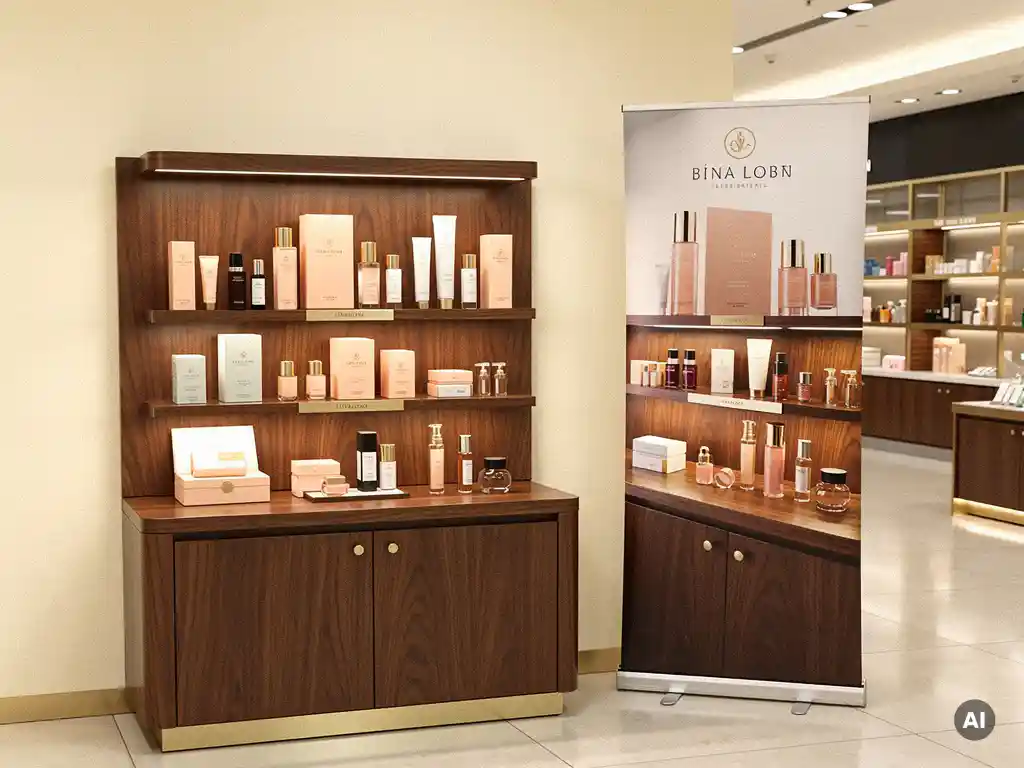
Temporary POS displays are short-term, campaign-led units designed for a defined promotional period, typically constructed from lightweight materials such as corrugated board or foam. Permanent POS displays are long-term branded fixtures built from durable materials, wood, metal, or acrylic, intended to remain in-store for months or years. The right choice depends on campaign duration, budget, and the strategic role the display plays within your retail environment. The sections below address the most common questions brands ask when planning their in-store display strategy.
The right type of POS display depends on three primary factors: how long the display needs to be in-store, what role it plays in your brand's retail strategy, and the budget allocated to the campaign. Temporary displays suit time-limited promotions, seasonal launches, and product trials. Permanent displays are appropriate when a brand has a consistent fixture in a retailer's planogram and requires a durable, long-term branded presence.
Brands entering a new retail environment for the first time often begin with a temporary unit to test shopper response before committing to a permanent fixture. Established brands with confirmed shelf or floor space in major retailers, such as pharmacy chains or department stores, typically invest in permanent displays that reinforce brand identity consistently over time. In many cases, the most effective retail strategies use both in parallel, which is addressed in detail in the final section below.
Temporary POS displays are most commonly made from corrugated cardboard, foam board, or lightweight plastics such as PET or thin-gauge polypropylene. These materials are cost-effective, easy to print on, and straightforward to assemble and dismantle, making them well-suited to short promotional windows of a few days to several weeks.
Corrugated board is by far the most widely used material for temporary retail displays. It is lightweight, recyclable, and can be die-cut and printed to a high standard, allowing brands to achieve strong visual impact without significant material cost. Foam board offers a slightly more rigid alternative for countertop units and shelf barkers. Some temporary displays incorporate elements of thin acrylic or printed polypropylene to add a degree of perceived quality, particularly in beauty and health categories where brand presentation is closely linked to consumer trust.
From a sustainability perspective, corrugated board temporary displays carry a lower environmental footprint when responsibly sourced and recycled at end of life, an increasingly important consideration for brands operating with environmental commitments in 2026.
Permanent POS displays are constructed from robust, long-lasting materials including wood, metal, acrylic, and engineered composites. These materials are selected for their durability, structural integrity, and ability to maintain a premium branded appearance through sustained in-store use over months or years.
The most common material choices for permanent retail displays include:
Material selection for a permanent display is driven by the retail environment, the brand's aesthetic positioning, and the expected duration of deployment. A unit installed across a national pharmacy chain must withstand daily handling, restocking, and cleaning, requirements that corrugated or foam board cannot meet.
Temporary POS displays are designed to last between one and twelve weeks in-store, aligned to a specific promotional campaign, seasonal event, or product launch. Permanent POS displays are engineered to remain in-store for one to five years, depending on the materials used, the intensity of shopper interaction, and the retailer's fixture refresh cycle.
In practice, the lifespan of any display is influenced by the retail environment as much as the materials. A temporary corrugated unit placed in a high-footfall supermarket aisle will deteriorate faster than the same unit in a quieter specialist retailer. Permanent displays in pharmacy environments, where restocking is frequent and shopper engagement is direct, must be built to withstand sustained contact without showing wear that would undermine brand perception.
Brands should plan display lifecycles as part of their broader retail calendar. A temporary unit that outlasts its promotional window becomes a liability rather than an asset, while a permanent fixture that is not maintained or refreshed can erode brand standards. Professional installation and periodic compliance checks are essential to protecting the in-store investment across both display types.
Temporary POS displays carry a lower unit cost than permanent displays, often significantly so, but the total cost comparison depends on campaign frequency, volume, and longevity. A permanent display represents a higher upfront investment that is amortised over a longer deployment period, typically delivering a lower cost per week in-store when used consistently over its full lifespan.
Several cost factors distinguish the two approaches:
Brands should evaluate cost not only on production spend but on the commercial return generated by the display. A well-designed permanent fixture that consistently drives conversion at the point of purchase will outperform a lower-cost temporary unit that fails to engage shoppers effectively.
Brands should use temporary and permanent POS displays together when they hold a consistent retail presence that also requires campaign-specific promotional activity. The permanent fixture anchors the brand's in-store identity and product range, while temporary displays are deployed around it to drive urgency, highlight new launches, or support seasonal promotions.
This layered approach is particularly effective in beauty, health, and personal care categories, where a permanent branded unit holds the core product range and temporary displays, counter cards, shelf talkers, or floor-standing promotional units, are introduced alongside to support a new product launch or a time-limited offer. The two display types serve different shopper missions: the permanent fixture builds brand familiarity and supports considered purchase decisions, while the temporary display captures attention and drives immediate action.
Coordinating both within a single retail environment requires careful planning to ensure visual coherence. The temporary display should complement rather than compete with the permanent fixture in terms of colour, typography, and brand language. When both are designed and produced by the same partner, consistency is far easier to achieve, and the transition between campaign phases becomes a managed process rather than a reactive one.
Pivotal works with brand owners and marketing teams to design, manufacture, and install both temporary and permanent POS displays, managing the full project lifecycle from initial concept through to on-site delivery. As a full-service retail design partner, Pivotal provides:
In 2025 alone, Pivotal installed over 2,000 new retail and brand experiences, with in-store engineers visiting a store every 34 minutes. If you are planning a new retail display campaign or reviewing your existing in-store fixtures, contact Pivotal to discuss how a structured approach to point of sale display can strengthen your brand's presence at the point of purchase.