
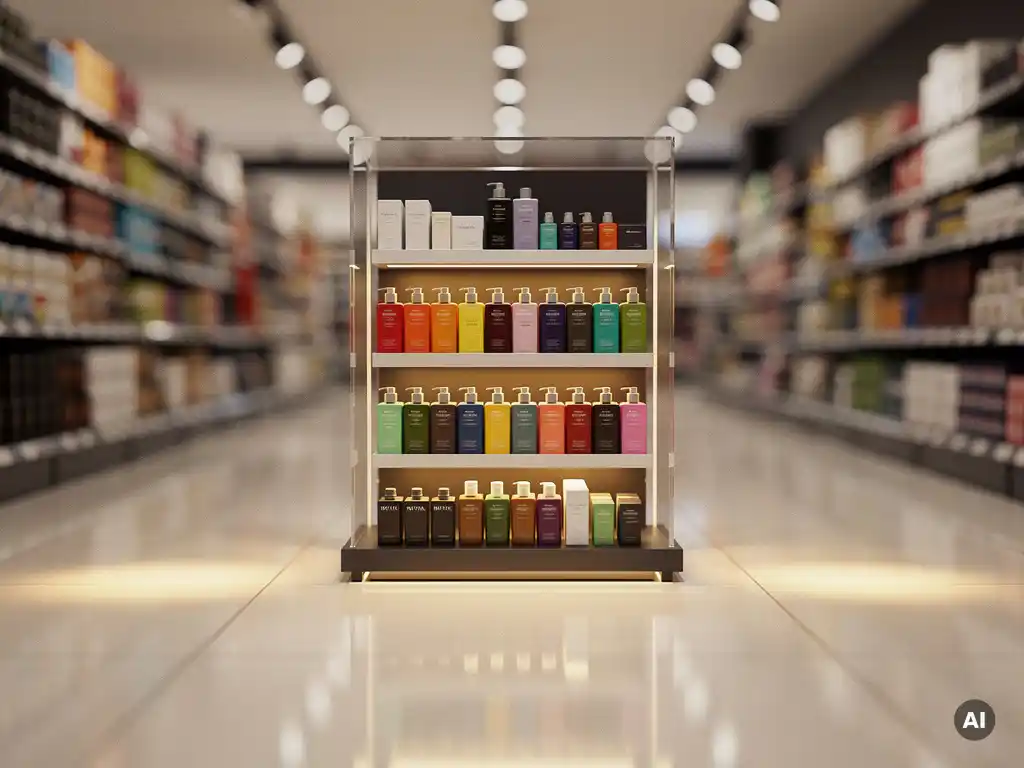
The future of point of sale displays in UK retail is defined by the convergence of technology, sustainability, and increasingly sophisticated shopper expectations. Brands that invest in purposeful, well-executed POS displays will continue to drive measurable conversion at the point of purchase, while those relying on generic or outdated fixtures risk losing ground to competitors who treat in-store experience as a strategic asset. The sections below address the most pressing questions shaping retail display strategy in 2026.
Shopper behaviours are directly reshaping point of sale display design by forcing brands to move away from passive, product-centric fixtures toward immersive, experience-led environments. Today's shoppers enter physical stores with greater product knowledge, higher aesthetic expectations, and a reduced tolerance for cluttered or uninspiring displays. In-store displays must now earn attention rather than simply occupy space.
The shift is most visible in how brands approach the shopper journey within a store. Rather than positioning POS displays as a final push toward purchase, leading brands now design them as discovery touchpoints that communicate brand values, product benefits, and differentiation simultaneously. This means display design must account for dwell time, sightlines, tactile interaction, and the emotional cues that convert browsers into buyers.
Shopper insight data plays a critical role in this evolution. Understanding how different demographics navigate a pharmacy aisle or a department store beauty counter informs everything from fixture height and material choice to graphic hierarchy and product placement. Brands that commission displays without this intelligence are designing in the dark.
Technology plays an increasingly central role in next-generation POS displays by enabling dynamic content, interactive engagement, and real-time personalisation at the point of purchase. Digital screens, sensor-triggered lighting, QR-linked content, and augmented reality elements are all being integrated into retail display structures to deepen the shopper connection with a brand.
However, technology should serve the display strategy, not define it. The most effective in-store displays combine physical craftsmanship with selective digital integration. A well-constructed fixture with a single embedded screen delivering contextually relevant content will outperform a cluttered, tech-heavy unit that distracts rather than directs. The physical structure, materials, and form must remain the foundation.
Rapid prototyping and CAD capabilities are also transforming how brands develop and test display concepts before committing to full production. Brands can now evaluate how a display will look, function, and interact with its environment before a single unit reaches the shop floor, reducing costly errors and accelerating campaign timelines.
Sustainability is fundamentally changing point of sale display manufacturing by creating commercial and reputational pressure on brands to move away from single-use materials and wasteful production processes. Retailers, consumers, and regulatory bodies are all scrutinising the environmental credentials of in-store fixtures, making sustainable manufacturing a commercial imperative rather than a brand preference.
In practice, this means a growing shift toward responsibly sourced materials, including FSC-certified wood, recycled acrylic, and metal components designed for disassembly and reuse. Display structures are increasingly being engineered for longevity, with modular designs that allow graphic panels and product-specific elements to be updated without replacing the entire unit.
For brands operating at scale across multiple retail environments, the environmental impact of display production compounds quickly. Working with a manufacturing partner that integrates sustainability into the design and materials selection process from the outset is the most effective way to reduce that impact without compromising visual impact or structural integrity.
The most effective POS displays in UK retail today are those that combine structural clarity, brand coherence, and shopper relevance within the specific retail environment they occupy. No single display format outperforms all others universally. Effectiveness depends on the category, the retailer, the product, and the campaign objective.
That said, certain formats consistently deliver strong results across sectors:
The most effective point of purchase displays share one characteristic: they are designed with the specific retail environment and target shopper in mind, not adapted from a generic template.
A brand should invest in permanent displays when it has an established, long-term presence within a retail environment and requires a fixture that communicates brand authority, supports a full product range, and delivers a consistent shopper experience over time. Temporary displays are the right choice when the objective is short-term promotional uplift, a seasonal campaign, or a new product trial.
The distinction matters commercially. Permanent fixtures carry a higher upfront investment but deliver a lower cost per impression over their lifespan. They are particularly appropriate for brands in beauty, skincare, and wellness categories where shopper trust and brand environment are central to the purchase decision. Retailers are also more likely to grant prime floor or wall space to brands that commit to permanent, high-quality installations.
Temporary displays, by contrast, must work harder in a shorter window. They need to be visually arresting, structurally sound enough to withstand a campaign period, and easy to install and remove without causing disruption to the retail environment. For brands launching into a new retail channel or testing a market, a well-executed temporary display offers a lower-risk entry point before committing to a permanent solution.
Many brands operate both in parallel, using permanent fixtures as the brand anchor and temporary point of sale displays to layer in seasonal or promotional messaging around them.
End-to-end retail display production directly improves campaign outcomes by eliminating the coordination failures, timeline delays, and quality inconsistencies that arise when design, manufacturing, and installation are managed across multiple separate suppliers. When a single partner controls the full production chain, accountability is clear and the risk of specification errors between handoff stages is significantly reduced.
The practical impact is measurable. Campaigns reach the shop floor on time, displays are installed to specification, and the in-store experience matches the original creative intent. For brands running national rollouts across dozens or hundreds of locations, this consistency is commercially significant. A display that looks and functions differently across retail partners undermines brand equity and reduces the return on the original investment.
Installation quality is a particularly important factor. Displays that are incorrectly fitted, damaged during installation, or positioned outside agreed planograms fail to deliver the intended shopper impact regardless of how well they were designed or manufactured. Retailer-approved installation teams with direct accountability to the production partner close this gap and protect the campaign outcome from the point of manufacture through to the shop floor.
Pivotal is a UK-based, full-service retail design company that manages the complete display lifecycle, from initial concept and shopper insight through to manufacturing, installation, and compliance. For brands navigating the evolving demands of UK retail, Pivotal provides a single point of accountability across every stage of the process.
If your brand is reviewing its point of sale display strategy for 2026, contact Pivotal to discuss how an end-to-end retail design partnership delivers better outcomes at every stage of the campaign lifecycle.