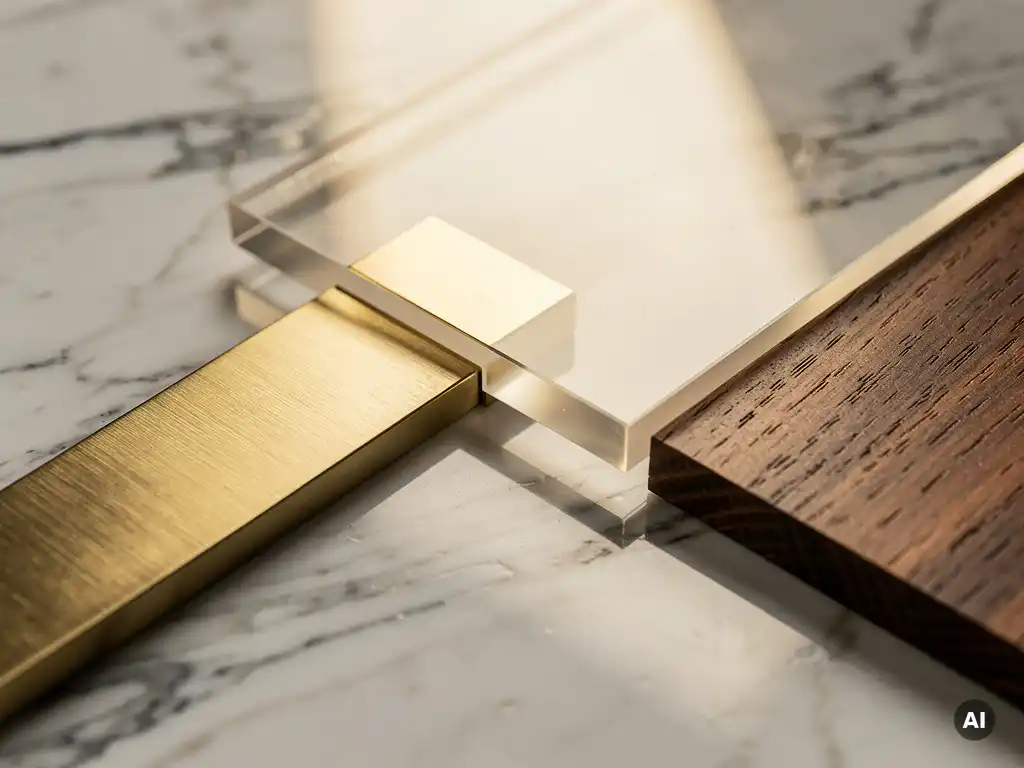
Materials and finishes in retail play a direct role in communicating brand identity by shaping how shoppers perceive, feel, and emotionally connect with a brand before a single word is read. The tactile quality of a surface, the warmth of a timber veneer, or the precision of a brushed metal edge all signal brand values instantly. The sections below address the most important questions brands and retailers face when making material decisions for in-store environments.
Materials and finishes communicate brand values in-store by creating an immediate, subconscious impression that reinforces a brand's positioning. A luxury skincare brand using polished acrylic and brass detailing signals premium quality. A sustainable lifestyle brand using reclaimed timber and matte finishes signals environmental responsibility. Material choices are a non-verbal language that operates before any promotional message is processed.
In physical retail, shoppers form judgments within seconds of approaching a display or fixture. The weight, texture, sheen, and colour of materials all contribute to a brand's perceived value. When those material choices align with what the brand promises in its marketing, the in-store experience reinforces trust. When they conflict, the disconnect undermines credibility. This is why brand identity retail design must treat material selection as a strategic decision, not an aesthetic afterthought.
Consistency between a brand's visual identity and its physical in-store materials is particularly important for brands operating across multiple retail environments, where the same fixtures may appear in premium department stores and high-street pharmacies simultaneously. The materials chosen must hold their communicative value across all contexts.
The most commonly used materials in retail display design include acrylic, MDF, timber, metal, and Foamex, each selected for different functional and aesthetic purposes. Acrylic offers clarity and a premium feel. Timber and joinery bring warmth and craftsmanship. Metal provides durability and a contemporary edge. The right choice depends on the brand's positioning, the display's lifespan, and the retail environment.
In practice, most retail displays combine several materials to achieve both structural performance and visual impact. Common combinations include:
Material selection also has practical implications. Heavier materials increase logistics and installation costs. More complex finishes extend production lead times. Brands working with a full-service retail display partner can navigate these trade-offs more effectively, as design and manufacturing expertise inform decisions from the outset rather than at the point of production.
Finish choices affect shopper perception by influencing the perceived quality, category positioning, and emotional tone of a brand's in-store presence. Gloss finishes tend to read as modern and premium. Matte finishes suggest sophistication and restraint. Textured surfaces invite touch, which increases dwell time and engagement. Each finish decision shapes how shoppers interpret the brand and whether they feel compelled to interact.
The relationship between finish and purchase behaviour is well understood within retail design. Shoppers who physically engage with a display, whether by touching a textured surface or picking up a product from a well-presented fixture, are more likely to convert than those who observe from a distance. Finish choices that invite tactile interaction are therefore a commercially significant factor in display design, not merely a visual one.
Colour and sheen also affect how products appear against the display background. A matte dark finish can make product packaging appear more vivid and prominent. A high-gloss white surface can create a clinical, precise aesthetic suited to pharmaceutical or dermatological brands. Brands should evaluate finish choices in the context of the products being displayed, not in isolation.
Permanent display materials are engineered for longevity, durability, and consistent appearance over months or years, while temporary display materials prioritise speed, cost efficiency, and ease of installation for short-term campaigns. The distinction determines material grade, construction method, and the level of finish investment appropriate for each application.
Permanent fixtures are typically constructed from higher-grade materials such as solid timber, metal fabrications, and premium-grade acrylic. They are designed to withstand repeated handling, cleaning, and restocking cycles without deteriorating. The initial investment is higher, but the cost per day of use over a multi-year lifespan is significantly lower. Permanent displays also carry greater brand authority, as their build quality communicates a long-term commitment to the retail environment.
Temporary displays, used for seasonal campaigns, product launches, or promotional periods, are typically produced from printed board, Foamex, or lightweight MDF. They are designed for rapid manufacture, straightforward installation, and cost-effective disposal or recycling after the campaign ends. The challenge is ensuring that even temporary materials and finishes maintain sufficient quality to represent the brand credibly in-store. A poorly finished temporary display can undermine brand perception as effectively as a poorly designed permanent one.
Sustainable materials fit into retail brand identity by providing physical evidence of a brand's environmental commitments, moving sustainability from a marketing claim to a tangible, visible reality in-store. For brands whose values include environmental responsibility, the materials used in their retail displays are a direct expression of that positioning. Shoppers increasingly scrutinise the gap between stated values and visible actions.
Sustainable material options in retail display design include FSC-certified timber, recycled or recyclable plastics, water-based inks and lacquers, and modular systems designed for disassembly and reuse. Each of these choices reduces environmental impact while also communicating brand values to shoppers who notice and care about such details.
There are practical considerations as well. Sustainable materials have advanced significantly in recent years, and many now match conventional materials in durability and finish quality. Brands should not assume that choosing sustainable options requires a compromise on aesthetics. A well-specified sustainable display can be indistinguishable from a conventional one in visual quality while carrying a materially lower environmental footprint. Pivotal's approach to retail display design incorporates sustainable material options as a standard part of the design conversation, not an add-on.
Brands can ensure material consistency across multiple store locations by establishing detailed material specifications, working with a single manufacturing partner, and implementing structured compliance processes that verify installations meet the agreed standard. Without these controls, the same display specification can produce noticeably different results across different stores, diluting brand identity at scale.
The key mechanisms for maintaining consistency include:
For brands managing large store portfolios, the scale of this challenge is significant. A minor inconsistency in finish or material grade that is acceptable in one store becomes a systemic brand problem when replicated across hundreds of locations. Selecting a retail partner with both manufacturing capability and employed installation teams provides the tightest control over this process.
Pivotal operates as a full-service in-store partner, managing every stage of the material and finish decision process from initial concept through to on-site installation. For brands seeking consistency, quality, and commercial impact from their retail display investment, Pivotal's integrated capability removes the risk that comes from coordinating multiple suppliers across the same brief.
In 2025, Pivotal installed over 2,000 new retail and brand experiences, with in-store engineers visiting a new location every 34 minutes. That scale of delivery reflects the operational depth required to maintain material and finish standards across complex, multi-location programmes. To discuss how your brand's in-store identity can be strengthened through the right material strategy, contact the Pivotal team today.
Start by mapping your material choices against your brand's core positioning — premium, sustainable, accessible, or heritage — and then cross-reference those choices with the practical demands of your retail environment, including footfall, dwell time, and fixture lifespan. A useful exercise is to audit competitor displays in the same retail space and identify where your material choices can differentiate rather than replicate. Working with a design and manufacturing partner early in the process ensures that aesthetic decisions are validated against production feasibility and budget before they become costly to reverse.
The most common mistake is selecting materials based on how they look in isolation — on a mood board or sample swatch — rather than how they perform in the actual retail environment under store lighting, alongside live product packaging, and after weeks of customer handling. Brands also frequently underestimate the impact of finish degradation over time; a high-gloss surface that looks premium on day one can appear scuffed and tired within months in a high-traffic location. Specifying materials without considering cleaning requirements, restocking wear, and the logistics of replacement is another avoidable error that affects long-term brand presentation.
Material selection is typically one of the most significant cost levers in any retail display programme, often accounting for 40–60% of total unit production costs depending on specification. However, cost should always be evaluated on a cost-per-day-of-use basis rather than upfront spend alone — a premium material that extends fixture lifespan by two years can be more cost-effective than a cheaper alternative that requires replacement within twelve months. Brands running multi-location programmes should also factor in logistics costs, as heavier or more fragile materials increase both shipping and installation expenses at scale.
Yes — sustainable materials have advanced considerably, and many FSC-certified timbers, recycled-content acrylics, and water-based lacquers now deliver finish quality that is visually indistinguishable from their conventional equivalents. The key is working with a manufacturing partner who has hands-on experience specifying and finishing sustainable materials, as the processing requirements can differ from standard materials and require adjusted production techniques. Brands should request prototypes finished in sustainable alternatives before making a final decision, as seeing and handling the material in context removes any doubt about quality.
Store lighting has a significant and often underestimated effect on how materials and finishes read in situ — a warm LED environment will enrich timber tones but can yellow cool-white acrylics, while high-intensity spotlighting will amplify gloss and create hotspots on reflective surfaces that distract from the product. Brands should always evaluate material and finish samples under lighting conditions that replicate the target retail environment, not under standard daylight or office lighting. If a display will be rolled out across multiple retail banners with different lighting setups, testing across all relevant conditions before final specification sign-off will prevent costly surprises post-installation.
The key is to prioritise finish quality over material grade — a well-printed, cleanly finished Foamex or lightweight MDF display can carry strong brand credibility if the print quality, edge finishing, and structural rigidity are tightly controlled. Brands should resist the temptation to cut corners on finishing processes for temporary displays, as shoppers have no way of knowing a display is temporary and will judge the brand on what they see. Setting a clear minimum finish standard for all temporary executions — regardless of campaign budget — protects brand perception consistently across all retail touchpoints.
For permanent display programmes, material selection should ideally begin 12–16 weeks before the required in-store date to allow time for prototyping, material sourcing, finish testing, and any design iterations before full production commences. Temporary or promotional displays typically require 6–10 weeks depending on complexity, though brands working with a full-service partner who holds material stock can compress these timelines. Starting the conversation earlier than feels necessary is almost always the right call — late material decisions are one of the most common causes of finish compromises and specification changes that affect the final quality of a display.