
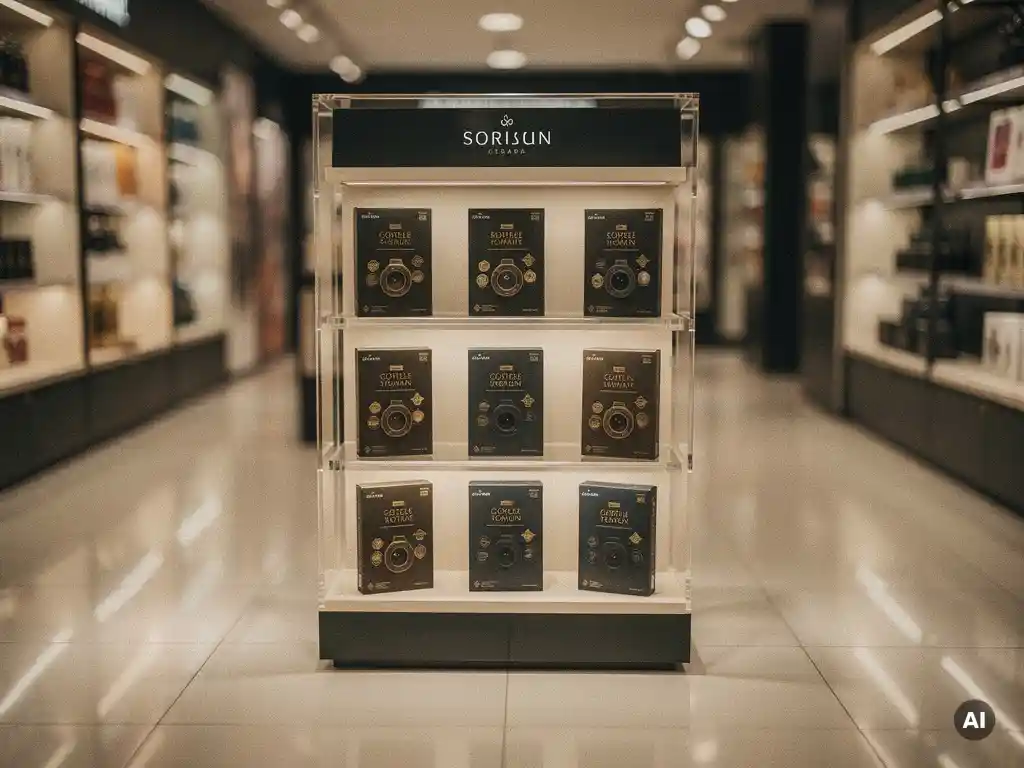
Point of sale (POS) plays a decisive role in a new product launch strategy by converting shopper awareness into purchase at the critical moment of decision. When a new product enters a retail environment, a POS display is often the first, and sometimes only, branded touchpoint a shopper encounters in store. The sections below address the most important strategic questions surrounding POS and new product launches, from display selection to performance measurement.
POS influences shopper behaviour by interrupting the default purchase pattern and directing attention to a new or unfamiliar product at the exact moment a buying decision is being made. A well-designed point of purchase display creates a visual hierarchy that draws the eye, communicates product benefits rapidly, and reduces the perceived risk of trying something new, all within a matter of seconds.
Shoppers navigating a busy retail environment make fast, often instinctive decisions. Without a clear in-store signal, a new product is easily overlooked in favour of established alternatives. Effective retail POS display addresses this by creating a dedicated brand zone that separates the product from the surrounding shelf noise. This spatial differentiation signals newness, quality, and brand investment, cues that shoppers use to assess whether a product is worth their attention. For brand owners launching into competitive categories such as beauty, health, or food and beverage, this distinction between being seen and being missed can determine whether a launch gains traction or stalls.
For a new product launch, the most effective POS display formats are those that combine high visibility with strong brand communication. Free-standing display units (FSDUs), counter-top display units (CDUs), and dedicated end-of-aisle fixtures are consistently the strongest performers because they create physical separation from the main shelf and allow for full brand storytelling in a compact footprint.
The right format depends on the retail environment, the product category, and the scale of the launch. In pharmacy and health retail settings, counter-top units placed near the point of payment are particularly effective for driving trial of new skincare or wellness products. In department stores and beauty halls, larger free-standing structures support more immersive brand experiences. For food and beverage launches in supermarkets, end-of-aisle and gondola-end displays generate the volume of shopper interactions needed to build awareness quickly.
Regardless of format, the display must be engineered to hold product securely, present it at the optimal sightline, and maintain its visual integrity throughout the campaign period. A display that degrades in appearance within weeks undermines the very brand credibility it was designed to establish.
POS supports brand storytelling by translating the brand's visual identity, messaging, and product proposition into a physical, three-dimensional retail experience. Unlike digital advertising, which a shopper can scroll past, a well-executed point of sale display occupies real space and creates a moment of genuine engagement with the brand at the point of purchase.
During a product launch, the display must do the work that advertising has primed the shopper to expect. If above-the-line campaigns have established a tone, a colour palette, or a product claim, the in-store POS must reinforce and deepen that impression. This alignment between media and physical retail is what converts awareness into conviction. Materials, finishes, structural form, and graphic language all contribute to how a brand is perceived. A premium product presented on a poorly constructed display sends a contradictory signal that erodes trust.
The strongest in-store product launch executions treat the display as an extension of the brand world, not merely a product holder. This requires close collaboration between brand teams and retail design specialists who understand both the creative intent and the practical constraints of the retail environment.
Temporary POS is designed for a defined campaign window, typically weeks to a few months, and is built from lighter, cost-effective materials suited to short-term deployment. Permanent POS is engineered for longevity, constructed from more durable materials, and intended to remain in store as a fixed brand fixture over an extended period.
For a new product launch, the choice between temporary and permanent POS depends on the strategic intent behind the launch itself.
Many brands use a phased approach: a temporary display to generate launch momentum, followed by a permanent fixture once the product has demonstrated sell-through performance. This reduces financial risk while maintaining in-store presence throughout the critical early trading period.
POS design should begin at least 12 to 16 weeks before the planned in-store launch date, and earlier for complex multi-site rollouts or displays requiring custom tooling, moulding, or bespoke materials. Starting too late is one of the most common and costly errors in new product launch retail planning.
The design and manufacturing process for retail POS display involves multiple sequential stages: briefing, concept development, CAD and structural design, prototyping, client approval, material sourcing, production, quality control, and installation. Each stage has its own lead time, and compressing any part of the process introduces risk, whether to quality, compliance, or delivery schedule.
Retailer approval processes add a further layer of complexity. Major retail chains have their own fixture guidelines and approval requirements, and submissions that do not meet those standards require revision, which consumes time that most launch schedules cannot absorb. Engaging a retail design partner early in the product development cycle, ideally when the product brief is being finalised, ensures that the POS strategy is integrated into the launch plan rather than retrofitted to it.
The effectiveness of POS in a new product launch is measured through a combination of sales performance data, compliance tracking, and shopper engagement indicators. The primary metric is sales uplift in stores where the POS display was deployed, benchmarked against comparable stores without the display or against the product's baseline performance.
Beyond sales data, meaningful measurement of in-store product launch POS performance includes:
Brands that treat measurement as a post-launch activity rather than a planned component of the POS strategy consistently find it harder to optimise future campaigns. Building measurement criteria into the brief from the outset ensures that the right data is captured from day one.
Pivotal provides end-to-end retail POS support for new product launches, managing every stage of the process from initial concept through to on-site installation. For brand owners and marketing teams preparing to enter or expand within physical retail, Pivotal's fully integrated service removes the coordination risk that comes with managing multiple suppliers across design, production, and installation.
In 2025, Pivotal installed over 2,000 new retail and brand experiences, with in-store engineers visiting a store every 34 minutes. If you are planning a product launch and need a trusted retail design partner to deliver your POS strategy from concept to shelf, speak to the Pivotal team to discuss your brief.